
The standard kitchen island width usually ranges between 24 and 48 inches, though this can vary greatly based on the room size, the island’s intended use, and the necessary kitchen island walkway clearance.
The kitchen island has become a staple in modern home design. It offers extra workspace, storage, and a place to gather. But getting the size right is crucial. An island that is too big can choke the kitchen. One that is too small might not offer enough function. Deciding on the right width involves looking at safety, comfort, and how you plan to use the space.
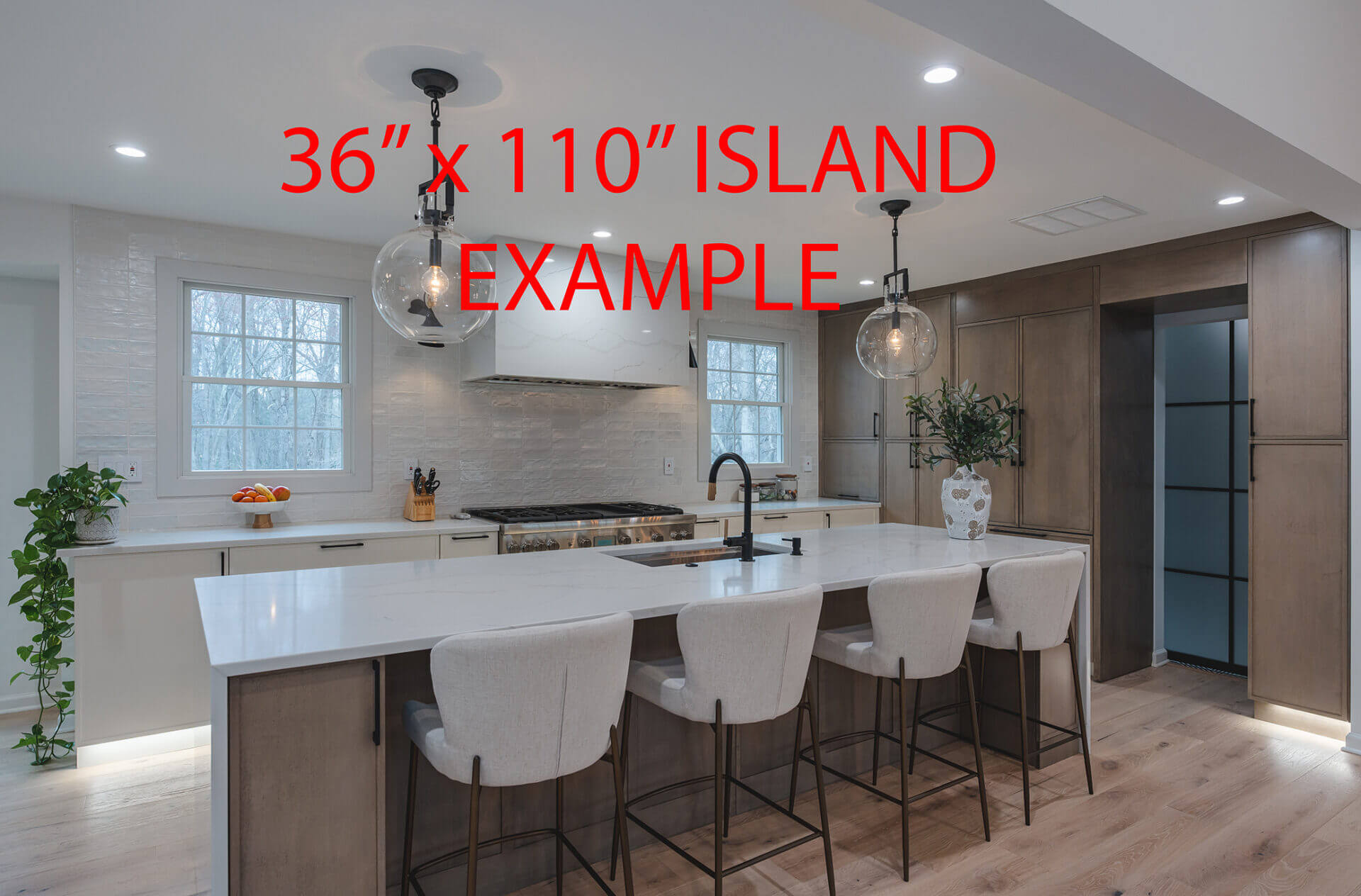
Image Source: bossdesigncenter.com
Factors Guiding Kitchen Island Width Decisions
Selecting the best width for your kitchen island is not a one-size-fits-all choice. Several key elements must work together. These factors ensure the island fits well and functions perfectly within your kitchen layout.
Room Size and Layout Constraints
The overall size of your kitchen dictates how large your island can be. You must fit the island without blocking movement. This means paying close attention to the space around it.
- Small Kitchens: Need careful planning. You might look at narrow kitchen island options.
- Large Kitchens: Can handle wider or longer islands. This allows for more seating or appliance integration.
Always map out the kitchen space first. Use painter’s tape on the floor to mark the island’s potential footprint before buying or building.
Intended Functionality of the Island
What do you want the island to do? This directly impacts the necessary width.
- Prep and Storage Only: If the island is just for chopping and holding pots, you need less depth. A smaller width might suffice.
- Seating Area: If you want people to sit at the island, you need extra width for knee space. This is a major factor in the kitchen island size for seating.
- Appliance Integration: Sinks, cooktops, or dishwashers take up space. They force the island width to be larger to accommodate the appliance itself plus required safety zones around it.
Standard Kitchen Island Widths Explained
When we talk about kitchen island dimensions, we often refer to the depth (front to back) more than the width (side to side). However, width is critical for traffic flow and seating.
Minimum Viable Width
For a purely functional workspace, the minimum width needed is quite small.
- 24 inches (2 feet): This is often the narrowest you should go for a functional work surface. It allows for basic prep tasks. It can also work well for a pass-through or simple storage unit in tight spaces. This falls into the category of small kitchen island size solutions.
Standard and Comfortable Widths
Most well-designed islands fall into a comfortable range that balances utility and space.
-
36 inches (3 feet): This is a very common and versatile width. It allows for standard cabinet depth (usually 24 inches) plus some clearance or a small overhang on one side. It works well if you only need storage on one side.
-
42 to 48 inches (3.5 to 4 feet): This range is ideal. It allows for seating on one side and cabinet storage on the other. If you have standard 24-inch cabinets and want a 12-inch overhang for stools, the total width hits 36 inches. Adding another 6 to 12 inches allows for better elbow room or deeper counter space. This is often the standard kitchen island width for balanced design.
Maximum Functional Width
What is the maximum kitchen island width you can build? While technically you could build an island that spans the entire room, practical limits exist based on reaching across the counter.
- Over 60 inches (5 feet): Islands this wide can become difficult to use effectively from one side. If the main work surface is more than 30 inches deep from the edge, you might have to lean too far over appliances or sinks. If you go this wide, consider adding a secondary prep sink or designing a tiered counter to break up the depth.
Deciphering Kitchen Island Depth vs. Width
People often confuse width and depth when discussing kitchen island dimensions.
- Width (Length): This runs parallel to the longest wall it is near or the main traffic flow path.
- Depth: This measures how far the island extends into the room (front to back).
While this article focuses on width, depth plays a huge role in how functional the width feels. We must look at the kitchen island depth guide briefly to see how they interact.
| Depth Measurement | Primary Use Case | Notes |
|---|---|---|
| 18 – 20 inches | Minimal seating area only (shallow overhang) | Only suitable for quick perching, not dining. |
| 24 inches | Base cabinet depth (standard kitchen island depth guide) | Excellent for pure storage; minimal seating possible. |
| 30 – 36 inches | Ideal for single-sided seating + storage | Allows 12″ overhang plus space for 12-15″ deep cabinets. |
| 42+ inches | Double functionality (storage back-to-back, or deep seating) | Requires more room for walkways. |
The Crucial Role of Walkway Clearance
The most common mistake in island planning is neglecting the surrounding space. Proper kitchen island walkway clearance ensures safety and comfort when moving around the island, especially when someone is seated or appliances are in use.
Clearance Standards for Different Scenarios
Building codes and universal design principles recommend specific clearances. These measurements are essential whether you choose a small kitchen island size or a large one.
1. Single-Wall Kitchen Layouts (Island Opposite One Wall)
If the island is opposite only one run of cabinets or wall:
- Minimum Clearance: 36 inches is the absolute minimum for basic traffic. This is tight, but passable if the room is small.
- Recommended Clearance: 42 inches. This gives one person comfortable passage.
- High Traffic/Appliance Use: 48 inches is best. This allows someone to open a dishwasher or oven door while someone else walks by comfortably.
2. Galley Kitchen Layouts (Island Between Two Walls/Cabinet Runs)
This setup requires the most space because traffic flows on both sides of the island.
- Absolute Minimum: 42 inches total between the two opposing surfaces. This is very restrictive.
- Code Requirement/Recommended: 48 inches minimum between the island and the opposing cabinet run. This allows one person to work at the counter while another passes behind them.
- Ideal for High Traffic: 54 inches or more. This allows two people to work across from each other or pass easily.
Clearance for Seating
When you include seating, the required clearance increases because stools take up space even when empty, and people need room to pull them out.
- If seating is on one side, ensure the walkway behind the stools has at least 42 inches of clear space, pushing the total required space further into the room.
Fitting Seating: Width Requirements for Comfort
For an island to serve as a dining or casual eating area, the width must accommodate the seating depth. This directly influences the overall kitchen island size for seating.
Knee Space and Overhang
People need room for their knees under the counter edge. This is called the overhang.
- Standard Counter Height (36 inches): Requires a minimum overhang of 10 inches. 12 to 15 inches is much more comfortable for extended sitting.
- Bar Height (42 inches): Requires a larger overhang, typically 12 to 15 inches, as stools often have a higher footrest and less room underneath.
How Width Relates to Seating:
If you have a 24-inch deep cabinet structure, and you want a comfortable 15-inch overhang, your total island depth becomes 39 inches. This still fits within many standard layouts but eats into the necessary walkway clearance discussed above.
If you want seating on both sides, you need a much wider island.
- Cabinet depth (24″) + Knee space 1 (15″) + Knee space 2 (15″) = 54 inches of depth, not counting the cabinet thickness. This requires a very large island footprint.
Exploring Narrow Kitchen Island Options
For smaller homes, condos, or older kitchens where space is very limited, a wide island simply won’t fit. Narrow kitchen island options are available, prioritizing function over sheer size.
The Rolling Cart Approach
The narrowest functional “island” is often a rolling cart.
- Width/Depth: These can be as narrow as 18 inches deep and 30 inches wide.
- Advantage: They can be moved out of the way when not in use, effectively eliminating walkway issues during peak traffic times.
Fixed Narrow Islands
If you prefer a fixed unit, aim for a depth of 24 to 30 inches maximum.
- Functionality: These work best as a serving station, an overflow prep area, or incorporating a small microwave drawer. They usually do not accommodate seating unless the seating is very shallow (less than 10 inches of overhang).
Customizing Your Island Size
Not every kitchen fits the mold. This is where opting for a custom kitchen island size becomes essential.
When to Go Custom
You should pursue custom sizing if:
- You have an unusual room shape (e.g., a long, thin kitchen).
- You need to fit specific, non-standard appliances (like a specialized wine fridge).
- You need to maximize every inch around architectural features like pillars or angled walls.
A good designer will help you balance your desired width with the necessary clearances, ensuring the island enhances, rather than hinders, the kitchen’s flow.
The Kitchen Island Countertop Overhang
The overhang is crucial to the width/depth equation. It determines the usability of the seating area.
- General Rule: For standard 36-inch high counters, aim for a 14 to 15-inch overhang for comfortable seating. This means your base structure (cabinets/support) must be 1 to 2 inches narrower than the total island depth by the time you add the counter material thickness.
| Seating Style | Recommended Overhang (Depth Added to Cabinets) | Total Depth Required for Seating Area |
|---|---|---|
| Quick Lunch (Stool) | 10 inches | 34 inches (24″ cabinet + 10″ overhang) |
| Comfortable Dining | 15 inches | 39 inches (24″ cabinet + 15″ overhang) |
| Bar Height Dining | 12 – 15 inches | 36 – 39 inches (24″ cabinet + 12-15″ overhang) |
Integrating Appliances and Sinks
If you place a sink or cooktop in the island, you must factor in mandatory safe zones around these elements. This significantly impacts the required width and depth.
Sink Integration
Sinks require counter space on both sides for drying racks, plumbing access, and landing zones.
- Minimum Landing Space: 12 inches on the sides of the sink bowl is highly recommended. If the sink is centered, this means the island needs at least 36 inches of width (12″ landing + sink bowl width + 12″ landing).
- Plumbing Depth: Sinks require space for the basin and plumbing pipes beneath the counter, reinforcing the need for a standard 24-inch depth base cabinet at minimum.
Cooktop Integration
Cooktops have strict safety requirements regarding clearance from combustible materials (like the island’s side panels or adjacent walls).
- Clearance: Local codes often dictate a minimum of 12 to 18 inches of clear, non-combustible countertop space on either side of the cooktop. This forces the island width to expand to accommodate these safety zones around the cooking surface.
Maximum Kitchen Island Width and Structural Limits
While size is often limited by traffic flow, extremely wide islands also face structural hurdles.
Support Requirements
Longer spans of countertop material (especially stone like granite or quartz) require significant support in the middle.
- Unsupported Span: Most stone countertops cannot span more than 10 to 12 feet unsupported. If your island width exceeds this length, you will need internal supports, corbels, or even a knee wall built into the design.
- Overhang Support: Any significant overhang (like a seating area) needs proper support brackets or corbels to prevent the counter from cracking or sagging over time. This adds complexity and cost to your custom kitchen island size project.
Summary of Essential Width Guidelines
To make decisions easier, review these essential takeaways concerning island width and related measurements.
| Design Goal | Recommended Minimum Width (Side-to-Side) | Key Consideration |
|---|---|---|
| Basic Prep/Storage Only | 24 inches | Focus on depth (24″ cabinet recommended). |
| Standard Functionality | 36 inches | Allows for 24″ cabinet + 12″ landing space on one side. |
| Single Seating Area (Comfortable) | 42 inches | Allows 24″ cabinets + 15″ overhang + 3″ structure margin. |
| Walkway Clearance (Single side, high traffic) | 48 inches (for the walkway itself) | The island width must fit within the total room width alongside this clearance. |
| Dual Seating Area | 60+ inches (Island Depth) | This impacts depth, but also requires significant length (width) to be practical. |
Frequently Asked Questions (FAQ)
Q: Can I put an island in a kitchen that is only 10 feet wide?
A: Yes, you can often fit a small kitchen island size in a 10-foot wide kitchen, but you must be strict about clearance. If the two opposing cabinet runs are 24 inches deep each (48 inches total), you are left with 72 inches (6 feet) for the island width and the two walkways. If you aim for a 42-inch walkway, this leaves you only 30 inches for the island width, which is quite small but functional for storage.
Q: What is the ideal depth for a kitchen island that includes seating?
A: The ideal depth for an island that includes seating is usually 39 inches. This is based on 24 inches for standard base cabinets, plus a comfortable 15-inch overhang for knee room.
Q: How much space do I need for a 12-inch kitchen island countertop overhang?
A: If the base cabinet structure is 24 inches deep, a 12-inch overhang brings the total depth to 36 inches. This provides functional space for seating, though 15 inches is often preferred for better comfort when using stools for longer periods.
Q: Is a 30-inch wide island practical?
A: A 30-inch wide (length-wise) island is usually too narrow to be truly practical for most functions, unless it is very deep. It works best as a tiny mobile cart or a very narrow fixed storage unit where traffic flow is only expected on one side. It does not allow for much more than a narrow appliance or a small open shelf area.
Q: How do I ensure good kitchen island walkway clearance when placing stools?
A: To ensure good clearance when stools are in use, measure the space needed for the stool itself (often 18-20 inches from the island edge) plus maneuvering room. Aim for 48 inches between the back of the stool and any opposing cabinet or wall. If you cannot achieve this, ensure the island is movable or opt for a design where seating is only on the ends of the island, leaving the main traffic paths clear.