
The average kitchen renovation price in the United States typically falls between \$15,000 and \$75,000, but this figure varies widely based on the scope of the project, the quality of materials chosen, and the size of your kitchen.
Planning a kitchen remodel can feel like stepping into a maze of numbers and decisions. How much money should you set aside? What gets the biggest chunk of your funds? This guide will break down the costs clearly. We aim to make kitchen remodel budget planning straightforward, whether you dream of a minor refresh or a total gut job.
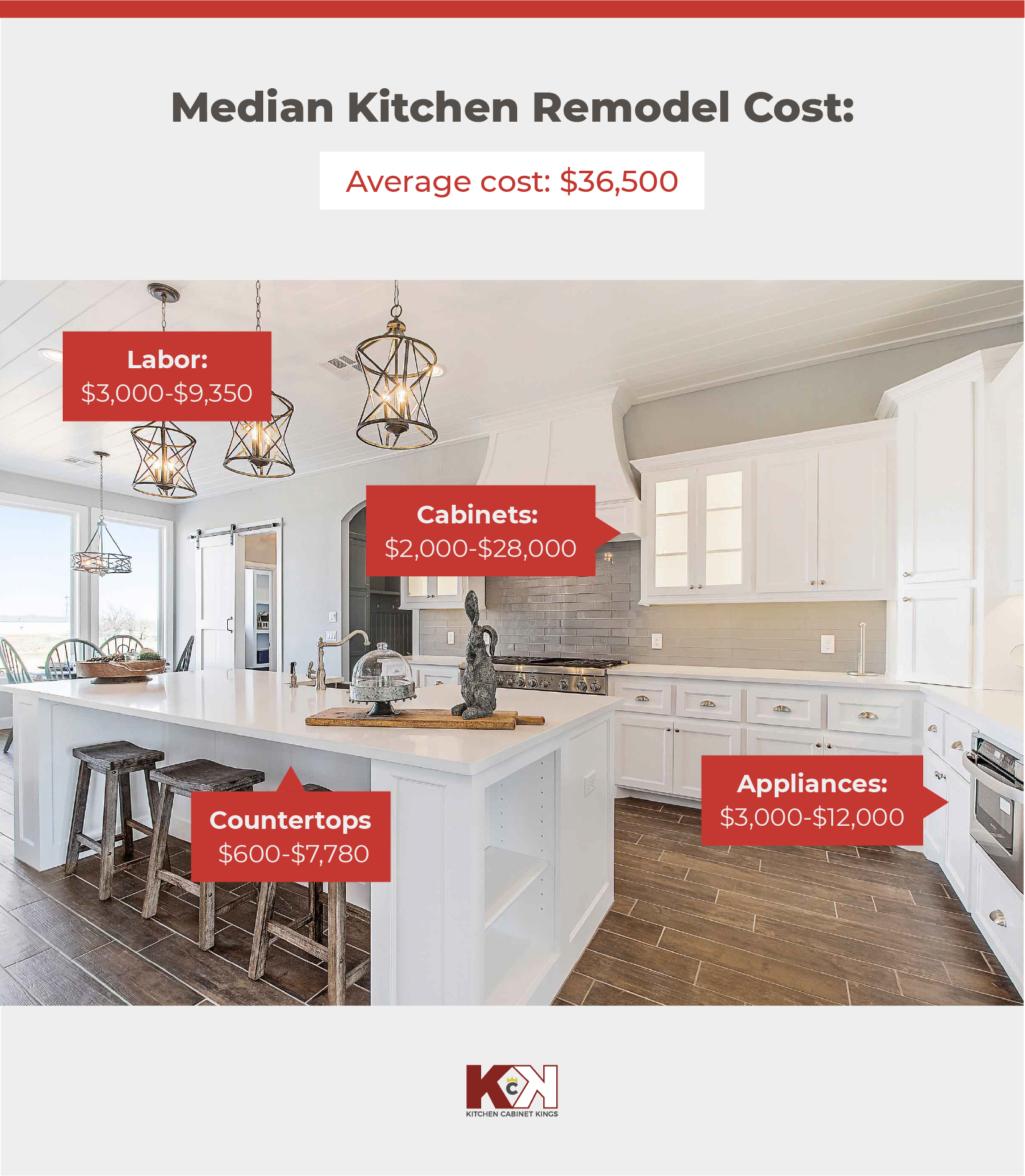
Image Source: cdn.kitchencabinetkings.com
Deciphering the Price Range for Kitchen Redesign
Kitchen remodels offer the widest range of costs in home improvement. You can spend a few thousand dollars on paint and new hardware, or you can spend over \$100,000 on top-tier appliances and custom cabinetry.
Defining Kitchen Remodel Tiers
To help you place your project, renovation costs are often grouped into three main tiers.
| Remodel Type | Scope of Work | Typical Cost Range (Estimate) |
|---|---|---|
| Minor Refresh | Paint, hardware swap, refacing cabinets, new sink. | \$5,000 – \$15,000 |
| Mid-Range Remodel | New mid-grade cabinets, laminate or tile countertops, basic appliance replacement, new flooring. | \$25,000 – \$60,000 |
| Major Overhaul | Moving walls, custom cabinets, high-end stone counters, luxury appliances, new lighting layout. | \$75,000 – \$150,000+ |
These figures only give you a starting point. The real costs depend heavily on the factors affecting kitchen remodel cost.
Key Factors Affecting Kitchen Remodel Cost
Many elements influence where your final bill lands. Knowing these factors helps you control spending better.
Size Matters
Larger kitchens require more materials. More square footage means more cabinets, more countertop material, and more flooring. A small galley kitchen costs much less than a large open-concept space, even with the same material quality.
Layout Changes Add Expense
Keeping the existing layout (plumbing, gas lines, electrical outlets) is the most budget-friendly approach. If you decide to move the sink across the room or add a large island, you introduce plumbing and electrical work. This significantly raises costs. Major layout shifts can add 15% to 25% to the total bill.
Material Selections Drive the Budget
This is where homeowners often see the biggest swing in price.
- Cabinetry: Stock cabinets are cheapest. Semi-custom cabinets cost more. Custom cabinets made just for your space are the priciest option.
- Countertops: Laminate is budget-friendly. Granite, quartz, or butcher block falls in the middle. Specialty materials like quartzite or soapstone are premium choices.
- Appliances: A basic refrigerator might cost \$800. A smart, professional-grade range and integrated refrigerator system can easily run \$10,000 or more.
Location and Labor Rates
The cost of labor changes based on where you live. Remodeling in a major metropolitan area like New York City or San Francisco will have much higher quotes for kitchen remodeling projects than in a rural Midwestern town. Local demand for skilled tradespeople drives these rates up.
The Cost Breakdown Kitchen Remodel: Where Does the Money Go?
To manage your kitchen remodel budget planning, you must know what percentage of the budget goes to which trade or item. While these percentages vary slightly, this breakdown is typical for a mid-range remodel:
| Item Category | Estimated Percentage of Total Cost | Notes |
|---|---|---|
| Cabinetry and Hardware | 25% – 35% | Often the single largest expense. |
| Installation Labor | 15% – 20% | Includes demolition and setup. |
| Appliances | 10% – 15% | Varies based on choice (basic vs. luxury). |
| Countertops | 8% – 12% | Includes material and fabrication/installation. |
| Flooring | 5% – 8% | Depends on material (tile vs. vinyl). |
| Lighting and Electrical | 5% – 8% | Includes recessed lights, pendants, and wiring upgrades. |
| Plumbing and HVAC | 4% – 7% | Moving lines adds to this category. |
| Permits, Fees, and Contingency | 5% – 10% | Never skip the contingency fund! |
Contemplating Luxury Kitchen Renovation Expenses
If your goal is a luxury kitchen renovation expenses, expect cabinets and high-end appliances to push past 50% of your total budget. Luxury projects often involve premium features like custom-designed range hoods, integrated smart technology, exotic wood veneers, and professional-grade cooking stations. These projects frequently start well over \$100,000.
Affordable Kitchen Remodel Options: Stretching Your Dollars
Not everyone can afford a six-figure renovation. You can still achieve a fresh look with smart choices focused on affordable kitchen remodel options.
Cabinet Makeovers Instead of Replacements
Cabinets consume a large portion of the budget. Instead of replacing them entirely:
- Refacing: Keep the existing cabinet boxes but replace the doors and drawer fronts. This saves significant money over new custom boxes.
- Painting: A professional paint job can dramatically update old wood cabinets for a fraction of the cost of new ones. Use high-quality primer and paint designed for cabinetry.
Smart Countertop Choices
Forget expensive marble slabs. Look at these great alternatives:
- Butcher Block: Real wood countertops are beautiful, relatively inexpensive, and can be installed by a skilled DIYer. They require regular oiling.
- Laminate: Modern laminates look surprisingly good and are extremely durable and easy on the wallet.
- Tile: While grout cleaning can be a hassle, ceramic tile offers a budget-friendly way to cover large areas.
Appliance Strategy
Do not buy the most expensive appliance suite unless you absolutely need it. Many reliable, mid-range appliance brands offer excellent features without the designer price tag. Shop sales, especially around holiday weekends.
DIY vs. Professional Kitchen Remodel Cost Comparison
Can you save money by doing some work yourself? Yes, but it requires time, skill, and accepting certain risks.
The DIY Savings Potential
When you manage the project, you eliminate the general contractor’s markup (usually 15% to 25% of the total labor cost). If you are handy, you can handle demolition, painting, installing hardware, and perhaps even simple flooring.
However, remember the trade-offs:
- Time: A professional crew finishes faster. Your DIY kitchen might be unusable for months.
- Risk: Mistakes in plumbing or electrical work can be expensive and dangerous to fix later. Unpermitted work can cause trouble when you sell your home.
Comparing DIY vs. professional kitchen remodel cost
| Task | DIY Cost Impact | Professional Cost Impact |
|---|---|---|
| Demolition | Major savings | Included in labor quote |
| Painting/Finishing | Significant savings | Included in labor quote |
| Cabinet Installation | Difficult and precise; high risk of error | High labor cost, but guaranteed straight lines |
| Electrical/Plumbing Hookups | High risk; potential for costly rework/permits | Built into the overall cost, usually permitted |
For complex tasks like moving gas lines, structural changes, or extensive wiring, hiring licensed professionals is almost always necessary for safety and code compliance.
Navigating Quotes for Kitchen Remodeling Projects
Obtaining multiple quotes for kitchen remodeling projects is crucial for staying within your kitchen remodel budget planning. Never settle for the first number you see.
How to Get Accurate Quotes
To compare bids fairly, your request must be detailed. Provide the same specifications to every contractor.
- Create a Detailed Scope of Work: List every single item—the exact make and model of the sink, the type of tile you want (e.g., 12×24 porcelain), and whether demolition is included.
- Request Itemized Bids: A good quote breaks down costs: Demolition, rough carpentry, electrical, plumbing, appliance installation, etc. This helps you see where costs are higher between contractors.
- Verify Credentials: Always check licenses, insurance, and references. A low bid from an uninsured contractor is a huge financial risk.
The Contingency Factor
Always add a 10% contingency fund to your initial budget. If you are dealing with an older home, expect surprises—rotted subflooring, outdated wiring, or unexpected pipe locations. The contingency covers these issues without derailing your entire financial plan.
Return on Investment (ROI) on Kitchen Remodel
Should you remodel if you plan to sell soon? Investing wisely in your kitchen often yields a good return.
The ROI on kitchen remodel projects is generally quite strong, often returning between 60% and 80% of the money spent, depending on the quality and local market. A mid-range remodel usually performs better than a super high-end, custom job. Buyers expect modern, functional kitchens. A dated kitchen often depresses a home’s value more than it costs to update it minimally.
Focus on high-impact, budget-friendly updates for the best return:
- New paint (walls and cabinets)
- Updated hardware (faucets, cabinet pulls)
- Modern lighting fixtures
- Mid-range but attractive countertops (quartz is a current favorite for resale value)
Step-by-Step Kitchen Remodel Budget Planning
Effective planning prevents budget blowouts. Follow these steps to structure your renovation finances.
Step 1: Determine Your Top-Line Budget
Decide how much you can realistically spend, including financing costs if applicable. Be firm on this number. This dictates whether you are looking at affordable kitchen remodel options or considering luxury kitchen renovation expenses.
Step 2: Prioritize Wants vs. Needs
Create two lists. Needs are non-negotiable (e.g., fixing leaky plumbing, needing a dishwasher). Wants are desirable upgrades (e.g., soft-close drawers, pull-out spice racks). If costs run high, the ‘wants’ list gets cut first.
Step 3: Allocate Funds Based on Cost Breakdown
Use the typical cost percentages mentioned above as a starting point. If your top priority is high-end cooking, allocate more than 15% to appliances, and compensate by choosing a more modest countertop material.
Step 4: Get Preliminary Pricing
Contact a few suppliers (cabinetry, stone yards) to get rough material costs. This grounds your budget in reality before you talk to contractors.
Step 5: Secure Professional Quotes and Finalize Labor Costs
Use your detailed scope to get three to five solid quotes. Compare them closely and review the labor breakdown for each bid.
Step 6: Build in Contingency
Set aside that essential 10% buffer. Do not touch it unless an unforeseen structural issue arises.
Fathoming Material Costs: A Deeper Dive
Let’s look closer at the material choices that define the final project cost.
Cabinetry Deep Dive
| Cabinet Type | Description | Cost Implications |
|---|---|---|
| Stock | Pre-built standard sizes; limited options. | Lowest cost, fastest delivery. |
| Semi-Custom | More size and style choices than stock. | Mid-range price; good balance of customization and cost. |
| Custom | Built entirely from scratch to fit your exact space. | Highest cost; allows for complex designs and integration. |
If you are aiming for an average kitchen renovation price, semi-custom cabinets are usually the sweet spot.
Flooring Options and Expense
The flooring sets the foundation for the room’s look and durability.
- Vinyl Plank (LVP): Highly affordable, waterproof, and easy to install (great for DIY).
- Ceramic or Porcelain Tile: Durable and wide range of styles. Installation labor can be high if the pattern is complex.
- Hardwood: Beautiful but the most expensive, especially if matching existing wood floors elsewhere in the home. It requires more careful maintenance.
Final Thoughts on Kitchen Spending
Determining how much a kitchen remodel costs is never a simple answer. It depends entirely on your vision and your location. By engaging in thorough kitchen remodel budget planning, getting multiple detailed quotes for kitchen remodeling projects, and being realistic about your material choices, you can navigate the process successfully. Whether you aim for an affordable kitchen remodel option or a sweeping luxury upgrade, careful preparation ensures you maximize the ROI on kitchen remodel and end up with a space you love without breaking the bank.
Frequently Asked Questions (FAQ)
H4: What is the average cost for a kitchen remodel today?
The average kitchen renovation price currently sits between \$25,000 and \$60,000 for a functional, mid-range update in most parts of the US. Highly customized or large-scale remodels can easily exceed \$100,000.
H4: How much should I budget for contingency in a kitchen remodel?
You should always allocate at least 10% of your total projected budget as a contingency fund. For older homes (built before 1980), it is safer to plan for 15% due to hidden structural or system issues that might be discovered during demolition.
H4: Can I reduce the cost by doing demolition myself?
Yes, handling demolition yourself is one of the most immediate ways to lower DIY vs. professional kitchen remodel cost disparity. However, ensure you know how to safely disconnect utilities (water, gas) before tearing anything out, or hire a professional just for the disconnection phase.
H4: Does changing the kitchen layout drastically increase the cost?
Yes. Moving key elements like the sink (plumbing), stove (gas/ventilation), or refrigerator (electrical proximity) requires breaking into walls, floors, and ceilings. Layout changes add significant labor costs, often increasing the cost breakdown kitchen remodel by 15% or more.
H4: What provides the best ROI on a kitchen remodel?
Mid-range updates that focus on appearance and function—like quality countertops, fresh paint, and new mid-grade appliances—generally provide the best ROI on kitchen remodel when preparing to sell. Buyers prioritize modern looks over overly personalized, luxury kitchen renovation expenses.