
Yes, you can remove a kitchen sink faucet yourself; many homeowners successfully tackle this project. It takes a few tools and some patience. This guide will walk you through every step for uninstalling sink tap work safely and effectively. We will focus on kitchen faucets, but the basic steps are similar to removing bathroom vanity faucet units as well.
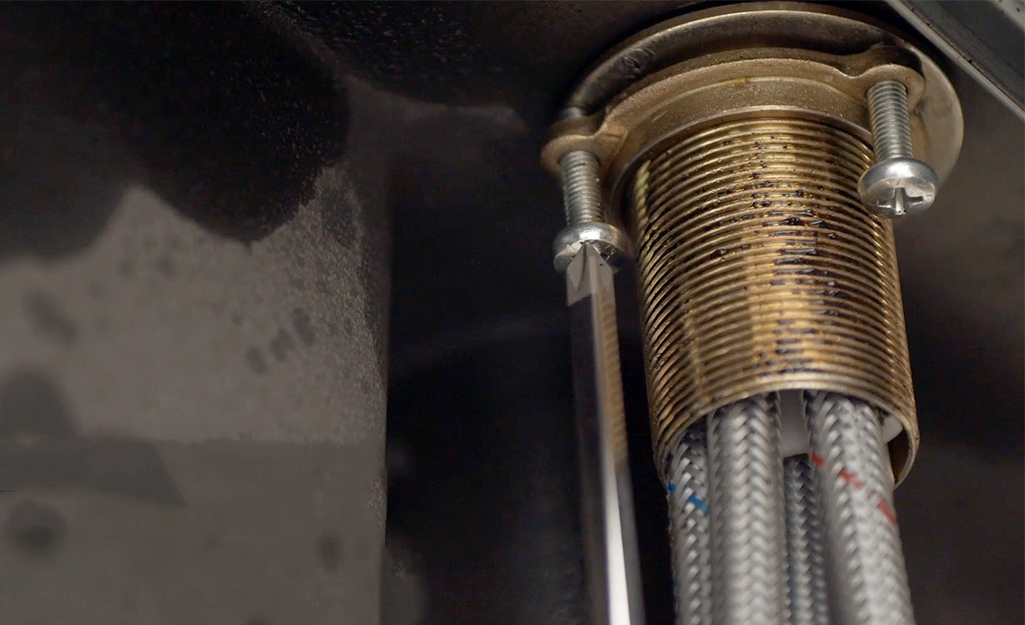
Image Source: contentgrid.homedepot-static.com
Preparation: Getting Ready for Faucet Removal
Before you touch any wrench, you must prepare the area. Good preparation makes the job much smoother and safer. This is crucial whether you are doing a leaky faucet repair or preparing for a full kitchen faucet replacement.
Safety First: Shutting Off the Water
The most critical first step is stopping the water supply. You do not want a sudden spray of water when you start working!
Locating the Shut-Off Valves
Look under your kitchen sink. You should see two small valves coming from the wall or floor. One controls the hot water, and the other controls the cold water.
- Turn the hot water valve clockwise until it stops.
- Turn the cold water valve clockwise until it stops.
If you cannot find these local valves, or if they do not work, you must shut off the main water supply to your house. Find your main shut-off valve, usually in the basement, garage, or near the water meter. Turn it off completely.
Draining Residual Water
Even after shutting off the valves, some water stays in the lines.
- Turn on the existing kitchen faucet. Let the water run until it stops completely. This releases pressure.
- Keep the faucet handle in the “on” position. This prevents a vacuum lock later.
Clearing the Workspace
You will be working in a cramped space. Make the area clear and safe.
- Remove everything from under the sink cabinet. This includes cleaning supplies and trash bins.
- Place a bucket or deep pan directly under the plumbing connections. This catches drips.
- Lay down old towels or rags inside the cabinet to soak up spills.
Gathering the Best Tools for Faucet Removal
Having the right tools saves time and frustration. You may need different tools for single handle faucet removal versus a two handle faucet replacement.
| Tool Needed | Why You Need It | Notes |
|---|---|---|
| Adjustable Wrench | For disconnecting water lines from faucet connections. | Use a good quality one. |
| Basin Wrench | Essential for reaching nuts in tight spaces above the sink basin. | This specialized tool is often required. |
| Screwdriver Set (Phillips and Flathead) | To remove any screws holding trim or handles. | Check your existing faucet type first. |
| Pliers (Channel Lock) | For gripping stubborn nuts or hoses. | Helpful for maneuvering. |
| Safety Glasses | To protect your eyes from falling debris or drips. | Always wear eye protection. |
| Flashlight or Headlamp | It is dark under the sink! | Good light makes work faster. |
| Penetrating Oil (e.g., WD-40) | To loosen rusted or stuck nuts. | Apply and let it sit for 15 minutes. |
Phase 1: Disconnecting Water Lines from Faucet
This phase involves detaching the supply tubes that bring water from the shut-off valves up to the faucet body.
Removing the Supply Lines
The supply lines connect the shut-off valves to the faucet shanks underneath the sink deck.
- Identify Connections: Look closely at where the flexible supply lines meet the faucet body (the long threaded posts sticking down).
- Use the Wrench: Use your adjustable wrench to hold the valve nut steady on the shut-off valve. Use a second wrench to loosen the coupling nut that connects the supply line to the faucet shank.
- Turn Counter-Clockwise: Turn the coupling nut to the left (counter-clockwise) to loosen it. Be prepared for a little water to spill into your bucket.
- Repeat for Both Lines: Do this for both the hot and cold supply lines.
Tip: If the supply lines are old or look brittle, it is wise to replace them entirely during your kitchen faucet replacement job.
Detaching Sprayer or Soap Dispenser Lines (If Applicable)
If your old faucet had a separate side sprayer or a built-in soap dispenser, you need to disconnect those lines too.
- For sprayers, the hose usually connects to a fitting beneath the main faucet body. Use a wrench to unscrew this connection.
- For soap dispensers, simply lift the dispenser bottle out and unscrew the plastic fitting holding the tube underneath the sink.
Phase 2: Releasing the Faucet from the Sink Deck
This is often the hardest part, especially when replacing old kitchen faucet models that have been in place for many years. Mineral deposits and rust make things stick. If you struggle here, you might need tips on how to remove stubborn faucet mounting hardware.
Locating the Mounting Nuts
Underneath the sink, where the faucet body passes through the sink holes, there are large nuts holding the faucet down tightly against the sink surface.
- Examine the Hardware: Depending on your faucet type (especially when performing a single handle faucet removal), you might see one large mounting nut, or two smaller nuts for a two handle faucet replacement setup. Some newer models use a large plastic bracket instead of metal nuts.
Applying Penetrating Oil (For Stubborn Faucets)
If the nuts are heavily corroded or rusted, apply penetrating oil directly onto the threads. Let it soak for at least 15 to 30 minutes. This gives the oil time to break down rust and corrosion.
Loosening the Mounting Hardware
This step requires the basin wrench or sometimes just a deep socket set if you have enough space.
- Position the Basin Wrench: Place the jaw of the basin wrench securely around the mounting nut. If you are working with a very tight space, use a flashlight to see exactly where the jaws are gripping.
- Turn Counter-Clockwise: Turn the wrench firmly to the left. You may need significant force. If the nut starts to turn, keep going until it is completely loose.
- Remove the Hardware: Once loose, you can usually unscrew the nut by hand or with pliers. Keep track of all washers and mounting plates. You might need them to identify the correct parts for your new faucet.
Important Note on Stubborn Nuts: If the nut refuses to budge, applying heat with a small handheld torch might help expand the metal slightly, but only do this if you are certain there are no flammable materials nearby (like old cleaning rags or plastic pipes). Otherwise, excessive force with the basin wrench is your best bet.
Lifting the Old Faucet Out
Once all nuts and hoses are disconnected from below, the faucet is ready to come out from above.
- Go back above the sink.
- Grasp the faucet body or spout firmly.
- Lift straight up. The old faucet should come free from the sink holes.
If it sticks, mineral deposits may have sealed the base gasket to the sink. Gently wiggle the faucet base or use a thin plastic putty knife to gently break the seal around the edge before trying to lift again. Do not use metal tools on delicate porcelain or stainless steel sinks, as they can scratch easily.
Phase 3: Cleaning Up the Sink Surface
Removing the old faucet leaves behind gunk, putty, and debris. A clean surface is vital for the new faucet seal to work correctly.
Removing Old Plumber’s Putty or Gasket Residue
Most faucets use plumber’s putty or a rubber gasket to create a waterproof seal between the faucet base and the sink deck.
- Scrape Gently: Use a plastic scraper or the edge of a credit card to gently scrape away the bulk of the old putty or residue.
- Use Cleaner: Apply a non-abrasive kitchen cleaner or mineral spirits to a soft cloth. Wipe down the area thoroughly. You want the sink surface completely smooth and dry before installing the new faucet.
- Inspect the Holes: Check the holes where the faucet lines and the faucet base were. Ensure they are clear of debris.
Special Considerations for Different Faucet Types
While the general process remains the same, certain faucet styles require slight variations in technique, especially when replacing old kitchen faucet units.
Dealing with Single Handle Faucet Removal
Single handle faucets usually have one large shank or a central mounting post. The hardware underneath is often simpler—perhaps just one large retaining nut or a cam-locking system.
- Cam Lock Systems: Some modern single-handle faucets use a large plastic nut that twists onto the post. You might not need a basin wrench here; often, you can use large pliers or even a specialized plastic wrench that sometimes comes with the new faucet. The goal is to twist this lock nut counter-clockwise to release tension.
Navigating Two Handle Faucet Replacement
Two-handle faucets mean you have two separate handles (one for hot, one for cold) and often a separate spout body. You must remove all three components independently.
- Handle Removal: Look under the sink for the mounting hardware for each handle valve stem. These are usually smaller nuts than the main spout nut.
- Spout Removal: The central spout base will have its own mounting hardware, similar to the single-handle unit described above.
Ensure you keep the mounting holes clear for each separate piece.
Faucets Mounted Through a Separate Base Plate (Escutcheon)
If your sink has three holes but your new faucet only uses one hole (common when upgrading from an old three-hole setup to a modern single-hole unit), you will have a deck plate, or escutcheon, covering the unused holes.
- This plate is usually held down by small screws from underneath or clips. Remove these fasteners first. The plate lifts off once the main faucet unit is removed. You will need this plate to cover the extra holes if your new faucet is a single-hole design.
Troubleshooting: When Removal Gets Tough
Sometimes, despite your best efforts, the old faucet seems permanently attached. Here is how to handle common challenges encountered when attempting how to remove stubborn faucet fixtures.
Problem 1: Rusted Threads Won’t Turn
If the penetrating oil fails, you need mechanical leverage.
- Impact Tools: If you have access to a small impact driver (used carefully), the vibration can sometimes break the rust bond better than steady turning force.
- Heat Cycle: Reapply penetrating oil. Then, try briefly applying a little heat (like from a hairdryer on high, never an open flame near plastic pipes) to the nut, followed immediately by trying to turn it while it’s hot. The expansion and contraction can crack corrosion.
Problem 2: The Faucet Body Spins But the Nut Stays Put
This happens when the faucet assembly spins freely in the sink hole, but the mounting nut itself is too corroded to turn.
- Bracing: You need a helper. Have one person hold the faucet body firmly from above, pushing down slightly. This prevents the entire assembly from spinning while the other person works on the nut underneath with the basin wrench.
- Cutting the Nut (Last Resort): If the nut absolutely will not budge, you may have to cut it off. Use a small hacksaw blade or a rotary tool with a cutting disc. Carefully cut through the nut without damaging the sink or the faucet shank threads. This is destructive but effective for truly stubborn faucet removal.
Transitioning to Your New Faucet
Once the old faucet is out and the area is clean, you are ready for the kitchen faucet replacement.
Prepping the New Faucet
Read the instructions for your new faucet before you begin installing it. Modern faucets often use gaskets or O-rings instead of plumber’s putty.
- Install Gaskets: Place any provided rubber gaskets or foam seals onto the base of the new faucet body. If your instructions specifically call for plumber’s putty on the new faucet, apply a thin bead around the base now.
- Install Riser Tubes (If Necessary): Some new faucets require you to screw the flexible supply lines onto the faucet shanks before installing the faucet body through the sink holes.
Installation Sequence
The installation process is the reverse of removal.
- Set the Faucet: Carefully feed the supply lines and mounting posts down through the hole(s) in the sink deck. Center the faucet body.
- Secure from Below: Working underneath, slide on the washers, mounting plates, and then thread the mounting nuts onto the posts. Hand-tighten them first.
- Final Tightening: Use your basin wrench or socket set to tighten the nuts securely. Do not overtighten, especially with plastic components, but ensure the faucet cannot wiggle or turn.
Final Connections
- Connect Water Lines: Attach the flexible supply lines from the faucet shanks to the corresponding hot and cold shut-off valves. Use two wrenches—one to hold the valve steady and one to tighten the supply line coupling nut. Tighten firmly, but do not strain the connections.
- Connect Sprayer Line (If Applicable): Clip or screw the sprayer hose back onto its dedicated connection point under the faucet body.
Testing Your Work
After all components are installed, it is time to test everything before you put your cleaning supplies back under the sink.
- Check All Handles: Ensure the faucet handles are in the “off” position.
- Slowly Restore Water: Go back to the shut-off valves under the sink. Slowly turn the cold water valve counter-clockwise to open it. Listen for any immediate hissing or spraying sounds. If you hear water escaping, shut it off immediately and check the connections you just made.
- Open Both Valves: Once the cold side seems fine, slowly open the hot water valve.
- Test Flow: Turn on the faucet handle above the sink. Let the water run for a minute or two. Check both hot and cold streams.
- Leak Inspection: Get down low under the sink with your flashlight. Check every connection you touched—the shut-off valves, the coupling nuts where the supply lines attach to the faucet shanks, and the main faucet mounting nuts. Look for drips or moisture.
If everything is dry after a few minutes of running water, congratulations! You have successfully completed your faucet removal and replacement project.
FAQ Section
Q: Can I remove a faucet without a basin wrench?
A: It is very difficult, especially for older models. A basin wrench is specifically designed to reach the high nuts in the tight space behind the sink bowl. While you might manage with long, thin channel-lock pliers for some very new, easy-to-access models, a basin wrench is highly recommended to avoid stripping the nuts.
Q: How do I know if I have a single or two handle faucet for removal?
A: A single handle faucet has one lever that controls both flow and temperature. A two handle faucet replacement involves removing two separate handles (one for hot, one for cold) plus usually a separate spout body.
Q: What if I can’t find the shut-off valves under the sink?
A: If you cannot locate local shut-off valves, or if they are seized, you must shut off the main water supply to your house. This is usually found outside near the street meter or in your basement/utility area. Always turn off the main before attempting to disconnect water lines from the faucet.
Q: My old faucet uses plumber’s putty, but my new one uses a gasket. Should I use putty anyway?
A: Always follow the instructions provided with your new faucet. If the manufacturer provides a foam or rubber gasket, that is designed to create the seal. Adding plumber’s putty underneath a gasket can sometimes create an uneven surface, leading to leaks. Use only what the new instructions specify.