
A good kitchen knife is a sharp, well-balanced tool that feels comfortable in your hand and holds an edge well after use. Choosing the right knives can make cooking easier, safer, and much more enjoyable. This guide will help you pick the essential kitchen cutlery you need for your home.
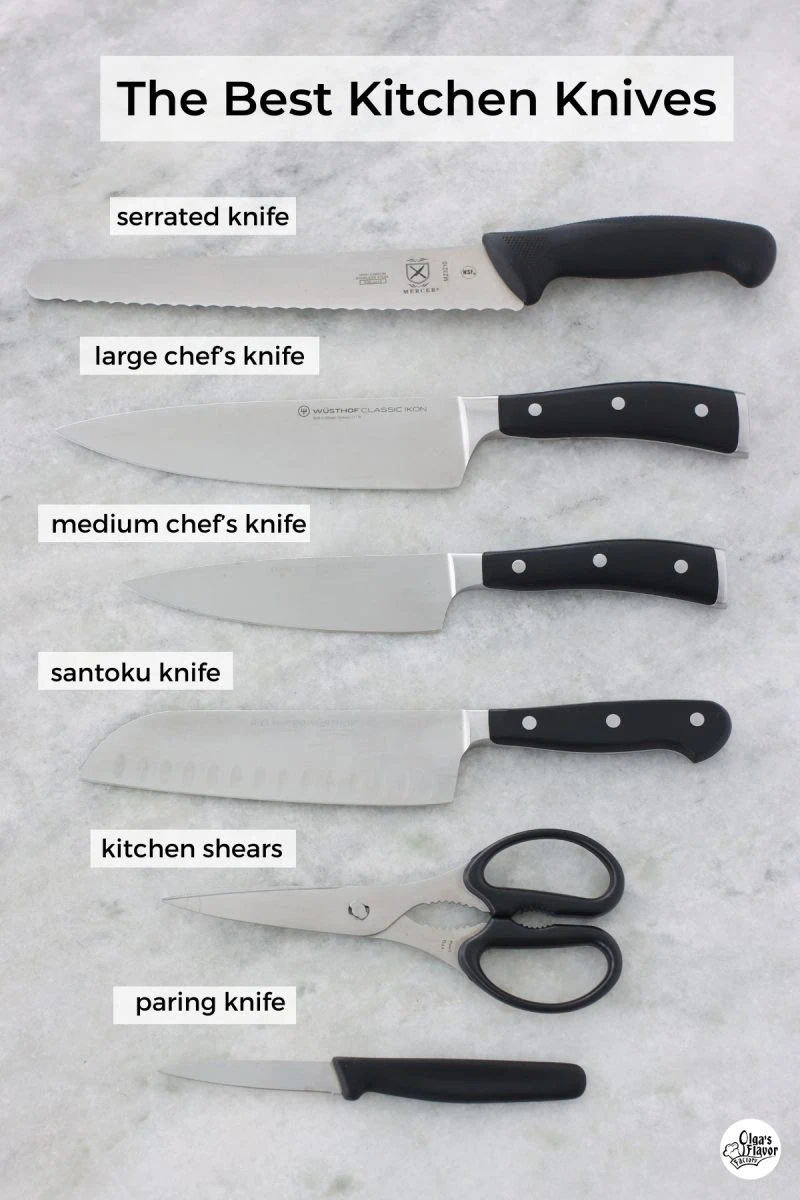
Image Source: www.olgasflavorfactory.com
The Core Components of Quality Kitchen Knives
A great knife is more than just a sharp edge. It is built from specific materials and designed with care. Knowing the parts helps you decide what makes a knife “good.”
H3: Blade Material Matters Most
The steel used to make the blade is the biggest factor in performance. You will mostly see two main types when shopping for affordable quality kitchen knives or high-end options.
H4: Stainless Steel vs. High Carbon Stainless Steel
Most modern knives use stainless steel because it resists rust well. However, for serious cooks, the choice often leans toward high carbon stainless steel knives.
- Stainless Steel (Standard): Easy to care for. It does not rust easily. It can be harder to get very sharp and might lose its edge faster than carbon steel.
- High Carbon Stainless Steel: This blends the rust resistance of stainless steel with the superior edge-holding of carbon steel. These knives can be honed to be the sharpest chef knife you own. They need a little more care to prevent staining but offer fantastic performance.
H4: Hardness and Edge Retention
Knife hardness is measured on the Rockwell scale (HRC). Harder steel keeps its edge longer. However, very hard steel can be brittle and might chip if you hit bone or hard surfaces. Most quality knives fall between 56 and 62 HRC.
H3: Blade Style and Construction
The way the knife is put together affects its weight, balance, and strength.
H4: Forged vs. Stamped Blades
This describes how the metal blank is shaped into a finished blade.
- Forged Knives: These are made by heating a thick bar of steel and hammering it into shape. They are heavier, very strong, and have a bolster (the thick part where the blade meets the handle). Forged knives often offer better balance.
- Stamped Knives: These are cut out from a large sheet of steel, like cookies from dough. They are lighter and usually cheaper. They lack a bolster.
H4: Full Tang is Best
The tang is the part of the blade that extends inside the handle. A “full tang” means the steel runs the entire length and width of the handle. This design adds strength and balance. Always look for a full tang in good knives.
H3: The Importance of the Handle
You must hold a knife often. A bad handle causes fatigue and makes cutting dangerous. Look for ergonomic knife handles.
- Comfort: The handle should fit your grip naturally. It should not have sharp edges or pinch points.
- Material: Common handle materials include wood, plastic (like POM), or composite materials. Wood looks nice but requires more care. Plastic is durable and often dishwasher safe (though hand washing is always better).
- Balance: The handle and blade should feel balanced, usually near the bolster. Good balance means less wrist effort when chopping.
Essential Kitchen Cutlery: What You Really Need
You do not need a giant drawer full of knives. A few excellent tools will handle 99% of kitchen tasks. When shopping, focus on building a small collection of the best kitchen knife set components rather than buying a large, low-quality block set.
H3: The Must-Have Trio
These three knives cover almost all daily cutting needs.
H4: The Chef’s Knife (8-Inch)
This is the workhorse of the kitchen. It is used for chopping, slicing, dicing, and mincing.
- Purpose: General-purpose cutting.
- Key Feature: A curved belly allowing for a rocking motion on the cutting board.
- Tip: If you only buy one knife, make it a great 8-inch Chef’s knife.
H4: The Paring Knife (3 to 4-Inch)
This small knife is perfect for detailed work done in your hand.
- Purpose: Peeling, trimming, mincing small items like garlic, and hulling strawberries.
- Key Feature: Precision and control for small tasks.
H4: The Serrated Utility Knife (Bread Knife)
This knife has teeth, making it ideal for foods with a hard exterior and soft interior.
- Purpose: Slicing bread, tomatoes, citrus fruits, and cakes without crushing them.
- Key Feature: Long, sharp teeth that saw through tough crusts.
H3: Highly Recommended Additions
These knives add versatility to your core set.
- Utility Knife (5 to 6-Inch): A mid-sized knife that handles tasks too big for a paring knife but too small for a chef’s knife, like slicing sandwiches or medium vegetables.
- Boning/Fillet Knife: Essential if you handle raw meat or fish often. Boning knives are stiff; fillet knives are flexible.
Deciphering Knife Styles: Japanese vs. German Knives
The origin of a knife often dictates its philosophy regarding edge, angle, and weight. Choosing between Japanese vs. German knives is a common dilemma for new buyers.
| Feature | German Knives (e.g., Wüsthof, Henckels) | Japanese Knives (e.g., Shun, Miyabi) |
|---|---|---|
| Steel Hardness | Softer (56–58 HRC) | Harder (60–64 HRC) |
| Edge Angle | Wider (20–22 degrees per side) | Sharper (10–15 degrees per side) |
| Weight | Generally heavier | Generally lighter |
| Durability | Very durable, forgiving of minor abuse | More prone to chipping if misused |
| Use Case | All-purpose chopping, good for hard-use kitchens | Precision slicing, fine detail work |
H4: German Knife Traits
German knives are famous for being robust and heavy. Their wider edge angle makes them very durable. They stand up well to accidental knocks against cutting boards or counters. They are often the choice for people looking for reliability and weight in their essential kitchen cutlery.
H4: Japanese Knife Traits
Japanese knives are prized for their extreme sharpness. They use harder steel and a much finer edge angle. This results in a cleaner, effortless cut, especially on delicate foods. They are lighter, favoring precise, nimble movements. If you want the sharpest chef knife possible, you are likely looking at a Japanese style.
Selecting the Best Knife Brands
When you are ready to invest, knowing the reputable names helps narrow the search. The best knife brands balance quality materials with expert craftsmanship.
- Top Tier (Often German or High-End Japanese): Wüsthof, J.A. Henckels (their higher lines), Shun, Global.
- Excellent Mid-Range (Often offering great value): Victorinox, Zwilling (their mid-range lines), Mercer Culinary.
- Affordable Quality: Victorinox frequently wins awards for offering top-tier performance at prices that fit the definition of affordable quality kitchen knives.
Maintaining Your Investment: Longevity Through Care
A sharp knife is a safe knife. Even the most expensive blade becomes useless if neglected. Proper care ensures your knives last decades.
H3: Knife Sharpening Techniques
Sharpening removes metal to create a new, fine edge. This is different from honing.
H4: Whetstones (Water Stones)
Whetstones offer the best control over the final edge angle and are necessary to truly maintain the edge on harder steels used in Japanese knives.
- Steps (Simplified): Start with a coarse grit (around 1000) to set the edge angle, move to a medium grit (2000-3000) to refine it, and finish on a fine grit (4000+) to polish it to razor sharpness. Practice is key to mastering this.
H4: Electric and Pull-Through Sharpeners
These are faster but often too aggressive for high-quality blades. They remove a lot of metal quickly and can damage delicate, high-angle edges found on the sharpest chef knife you might own. Use these sparingly, or only on very dull, less expensive knives.
H3: Honing vs. Sharpening
Many people confuse these two crucial knife maintenance tips.
- Honing: This realigns the microscopic edge that folds over with normal use. A honing steel does not remove metal; it straightens the existing edge. You should hone frequently—ideally before every use or every few uses.
- Sharpening: This is necessary only when honing no longer restores a good edge. Sharpening actually grinds away metal.
H3: Best Practices for Knife Care
Follow these simple rules to protect your blades:
- Hand Wash Only: Never put good knives in the dishwasher. The harsh detergents dull the edge, and jostling against other items can cause chips.
- Dry Immediately: Even high carbon stainless steel knives should be wiped dry right after washing to prevent water spots and potential rust.
- Proper Storage: Use a magnetic wall strip, a dedicated knife block, or in-drawer organizers. Never let knives rattle loose in a drawer where edges can bang against each other.
Fathoming Knife Balance and Feel
Balance is subjective but vital for long-term comfort. A well-balanced knife feels like an extension of your arm.
H4: Center of Gravity Check
Hold the knife gently by pinching the blade where it meets the handle (the bolster area).
- Perfect Balance: The knife should feel neutral or slightly blade-heavy. It should not flop forward or back too much in your fingers.
- Blade-Heavy: Good for chopping power, but can tire the wrist during long sessions.
- Handle-Heavy: Usually found on stamped knives; this forces the user to push harder, leading to fatigue.
H4: Grip Styles for Control
How you hold the knife affects safety and precision, especially when using a very sharp blade.
- The Pinch Grip: The professional standard. You grip the heel of the blade between your thumb and forefinger, with your remaining fingers wrapping around the handle. This offers maximum control over the blade tip and the cutting edge. This grip is essential when working with the sharpest chef knife you possess.
- Handle Grip: Holding only the handle. This is common for beginners or for tasks requiring less precision, like scooping food off the board.
Shopping for Value: Building Your Collection Wisely
Not everyone needs professional-grade steel right away. You can build a superb collection using smart choices.
H3: Focusing on the Chef’s Knife First
If your budget is tight, spend the most money on the 8-inch chef’s knife. A mediocre paring knife is less of a problem than a poor chef’s knife, which sees the most use. Look for brands known for delivering great performance at lower price points when searching for affordable quality kitchen knives.
H3: Inspecting Ergonomic Knife Handles
When testing handles, consider the shape, not just the material.
- Contouring: Do the handles have gentle curves that fit the palm?
- Texture: Is the material smooth but slightly tacky, ensuring it won’t slip when wet?
- Bolster Design: Does the bolster taper smoothly into the handle, allowing a comfortable pinch grip? Poorly designed bolsters on some best knife brands can dig into the hand.
Frequently Asked Questions (FAQ)
H3: Can I use a standard chef’s knife on bones?
Generally, no. Standard chef’s knives, even those made from durable high carbon stainless steel knives, are not designed for chopping through bone. Doing so can severely damage (chip or bend) the fine edge. Use a dedicated cleaver or butcher knife for bones.
H3: How often should I sharpen my knives?
If you use your knives daily, you should hone them often (weekly or bi-weekly). True sharpening (using stones or a grinding tool) is usually needed every 6 to 12 months, depending on usage frequency and steel hardness. The rule of thumb: Sharpen when honing no longer brings back the edge.
H3: Is it worth paying extra for Damascus steel?
Damascus steel refers to a pattern created by layering different types of steel. While beautiful, the visual pattern does not necessarily mean better performance than a well-made single-layer blade of quality high carbon stainless steel knives. Focus more on the steel hardness and edge angle than the decorative layering.
H3: What is the biggest mistake people make with their kitchen knives?
The most common mistake is storing them improperly (in a drawer) or washing them in the dishwasher. These actions quickly dull the edge and can damage the handle, negating the investment in quality essential kitchen cutlery.